A cooperative flowchart-programming game. Each player is a mining robot on a shared
asteroid, and your tableau of cards is your firmware — a grid of flowchart nodes wired by adjacency. Every shift
your pawn executes a few steps of your program, then you get one edit.
1–4 players. Any seat can be a bot, so one human with three robot teammates is a real way to play.
Open contracts
Looking…
How it plays
The team wins by reaching a points Quota before the Clock runs out. The Clock is a face-down deck of
shift cards: one flips every round, it decides whether the shift is Day or Night, and when there is nothing left to
flip the contract is lost.
Execute — your pawn walks your firmware, spending steps. Cards mine, smelt, unload, launch, fabricate.
Sensors branch YES or NO; counters loop.
Edit — one action a turn, on anyone's firmware: install, blueprint, replace, move, reorient, tune, patch.
Refined metal is the fork in the road: launch it for points, or have your bot fabricate it into equipment.
Equipment is never bought — it is built, by your program, and each piece bends the rules.
Build a Scanner and you can see what the Clock is about to do. Build nothing and you will still be drilling when it stops.
Sitting down
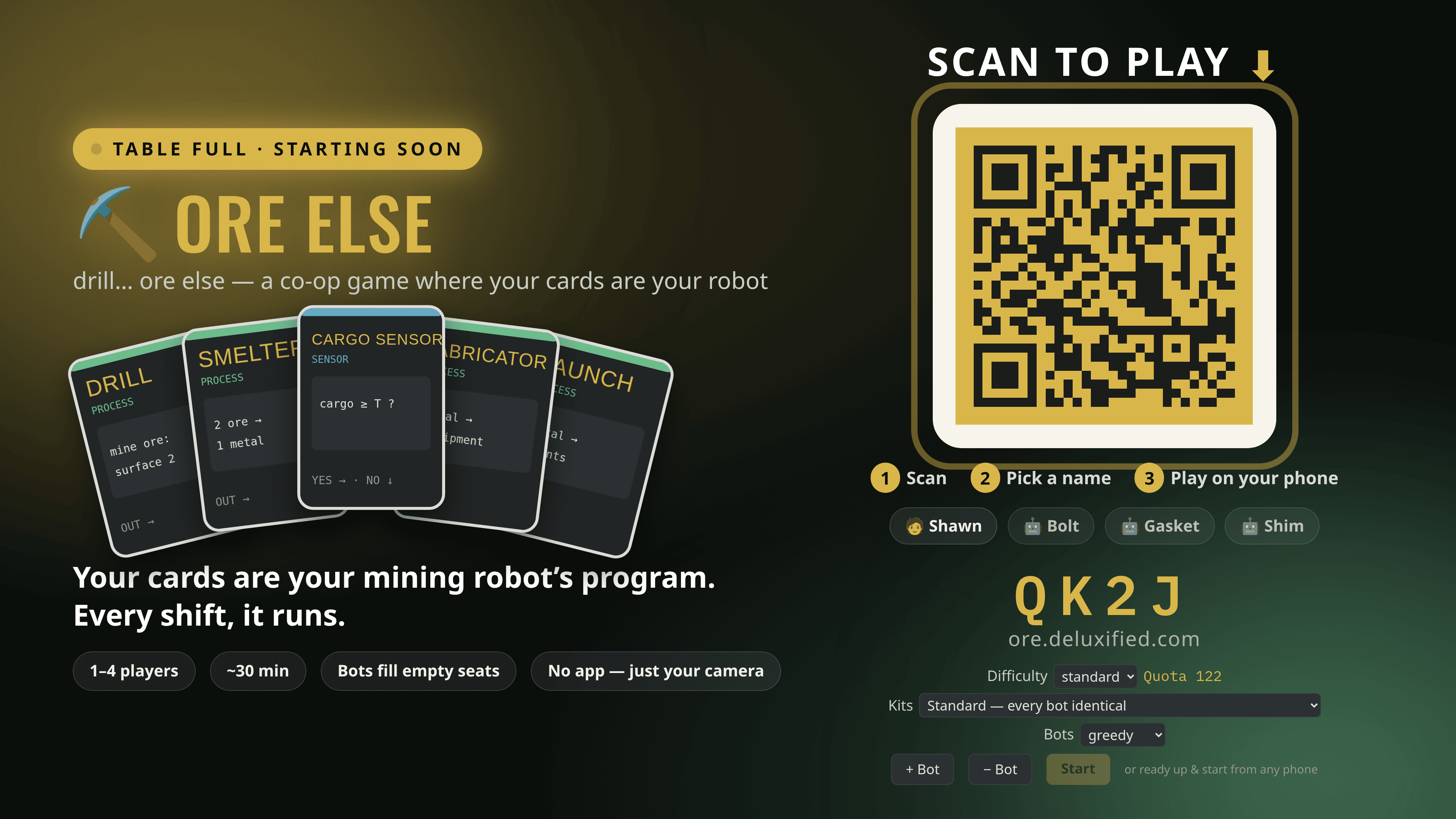
Put the board on a big screen and the phones scan in. Any seat can be a bot, so one human with three
robot teammates is a real way to play. The host sets the difficulty — the Quota updates as seats fill — chooses whether
everyone starts from the same kit, and picks how hard the bots think.
Your cards are the program
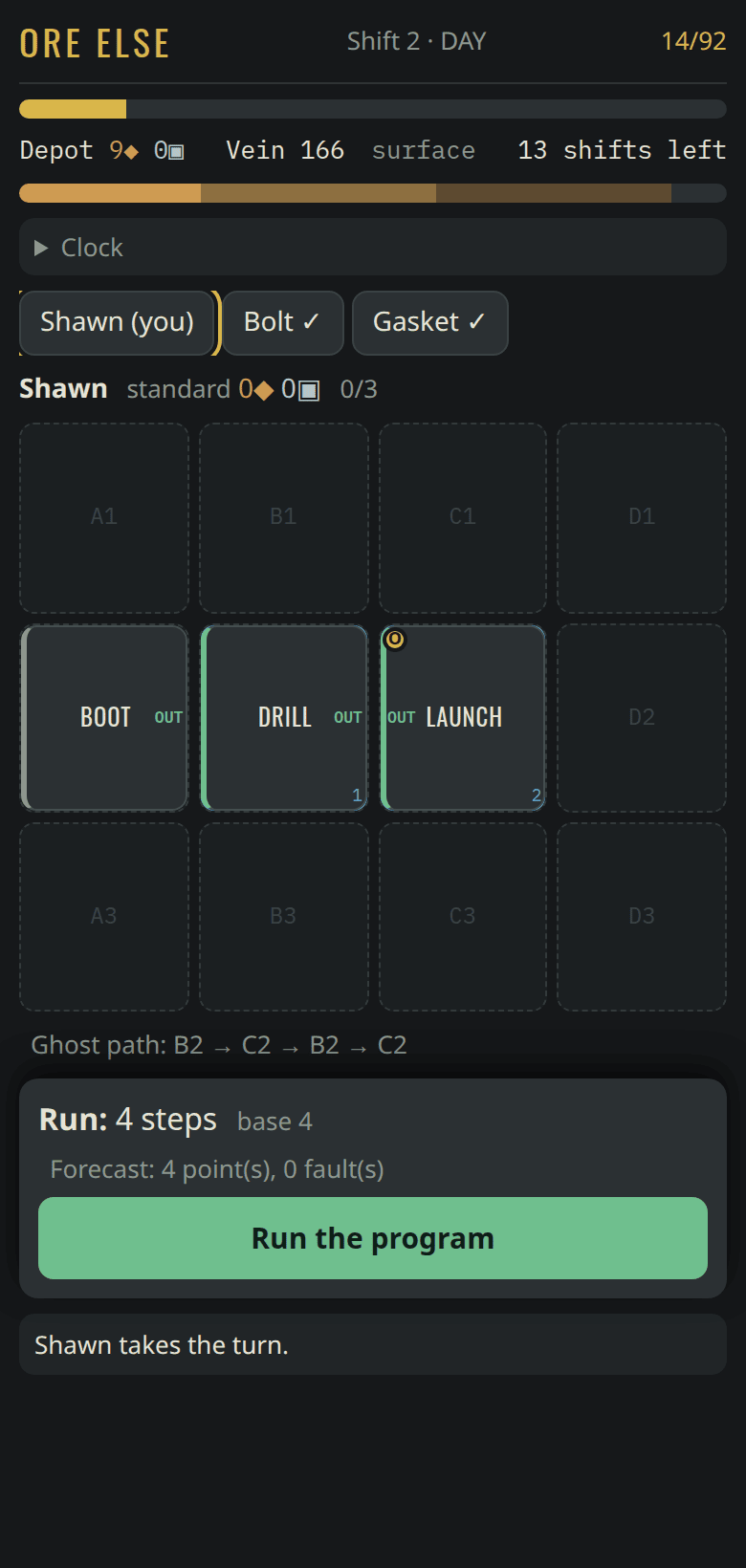
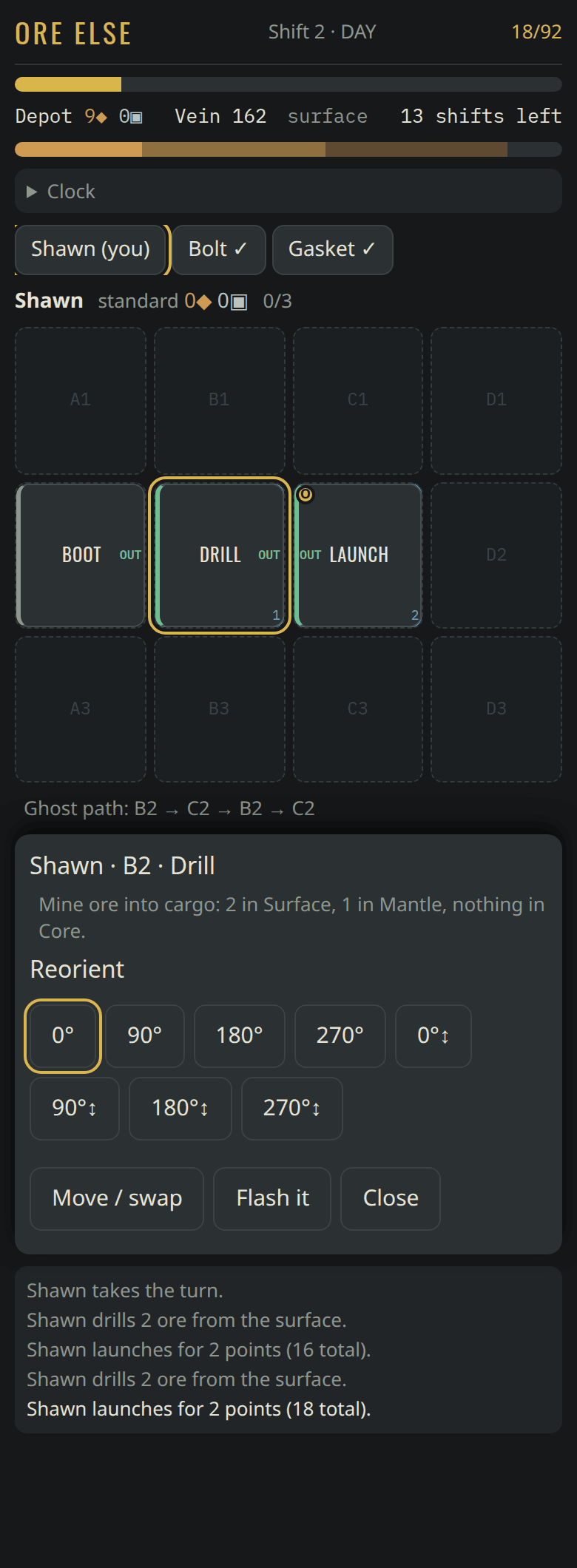
Each card's little OUT, YES, NO, LOOP and DONE arrows sit on its edges, and
the card they point at is simply the neighbouring slot — that is the whole wiring language. The gold token is your
pawn. Before you commit, the ghost path numbers the slots it is about to walk, and the panel shows the step
budget it has to spend and what the run is forecast to earn.
Then you get one edit
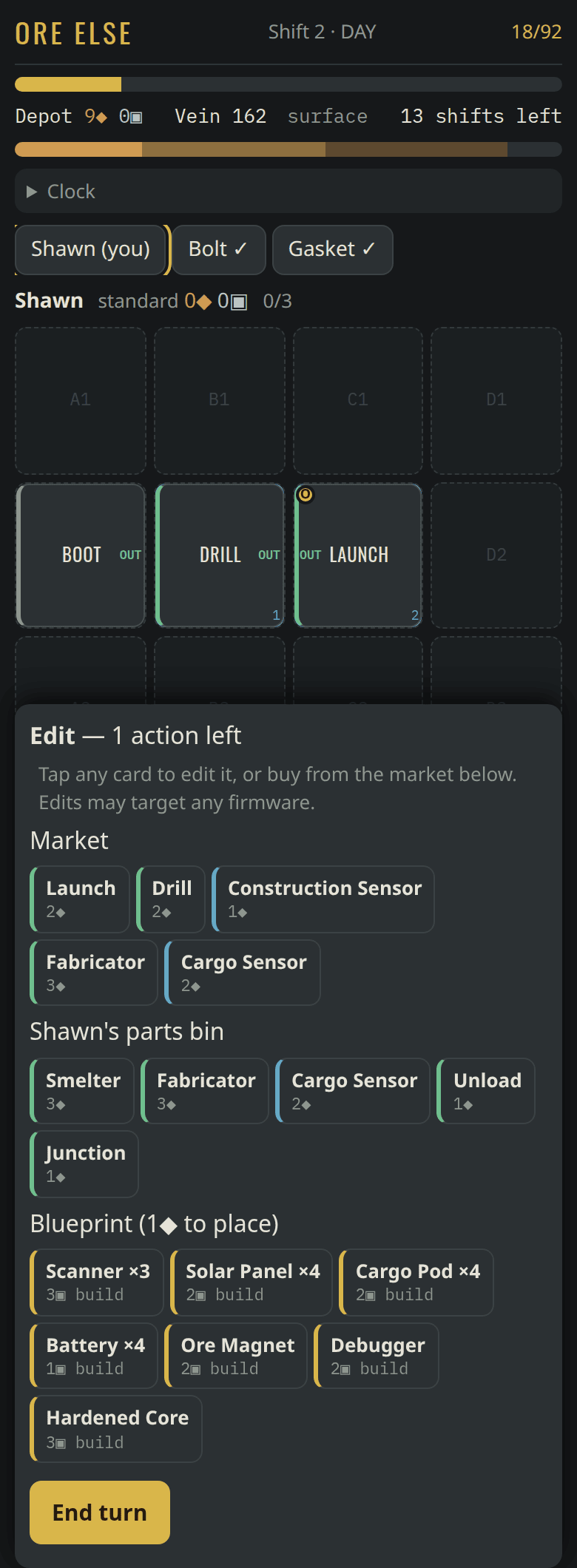
Everything you can spend on, in one place: the shared market, your own parts bin — cards only
your firmware can draw on — and the equipment available to blueprint, priced in the metal it will take to build.
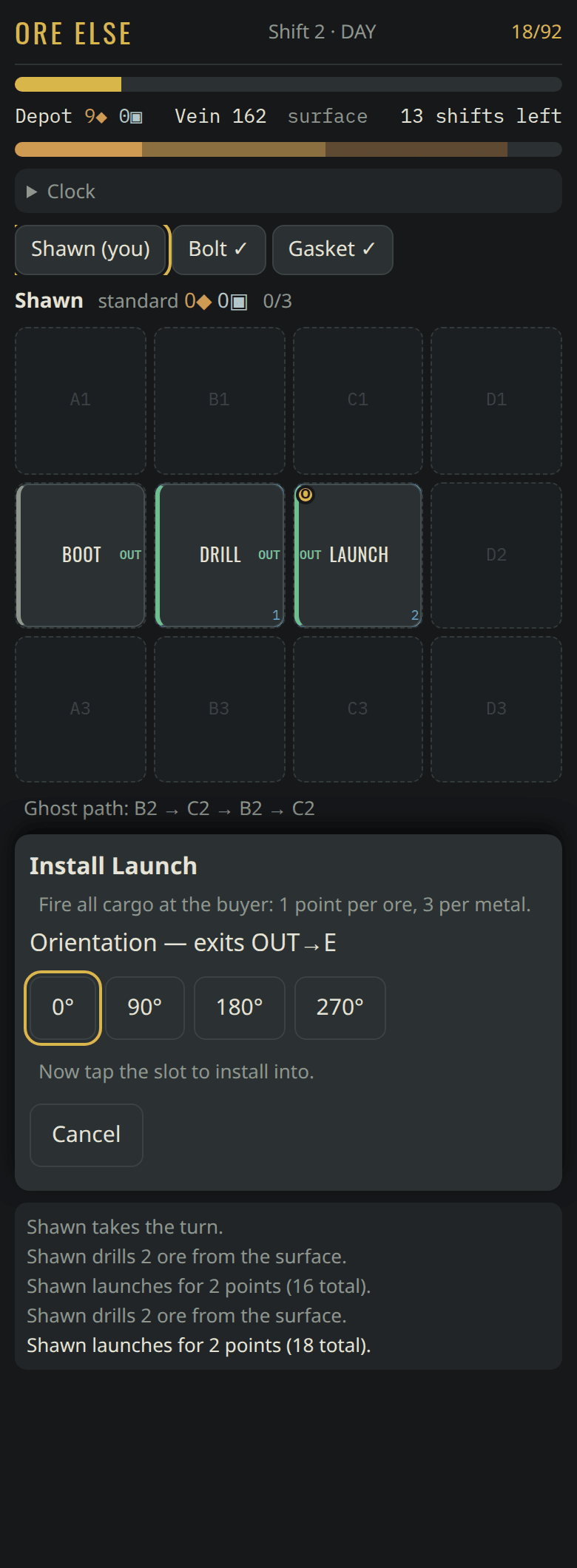
Every price is paid out of the one shared Depot, so a card you buy is a card the whole table paid for.Pick a card up and you turn it before you place it. The app spells out where its exits will end up
pointing, so you can see the wiring before you commit to it — and the ghost path redraws itself the moment the card
lands.Tap a card already on the grid to turn it through any of its eight orientations, move or swap it, change the
threshold a sensor compares against, or patch a bug out of it. One action a turn — and it may target
anyone's firmware, because the Depot is shared and the table is really one machine. Nothing is committed, and the
market does not refill, until you end the turn, so Undo and Reset Turn are always safe.
Launch it, or build with it
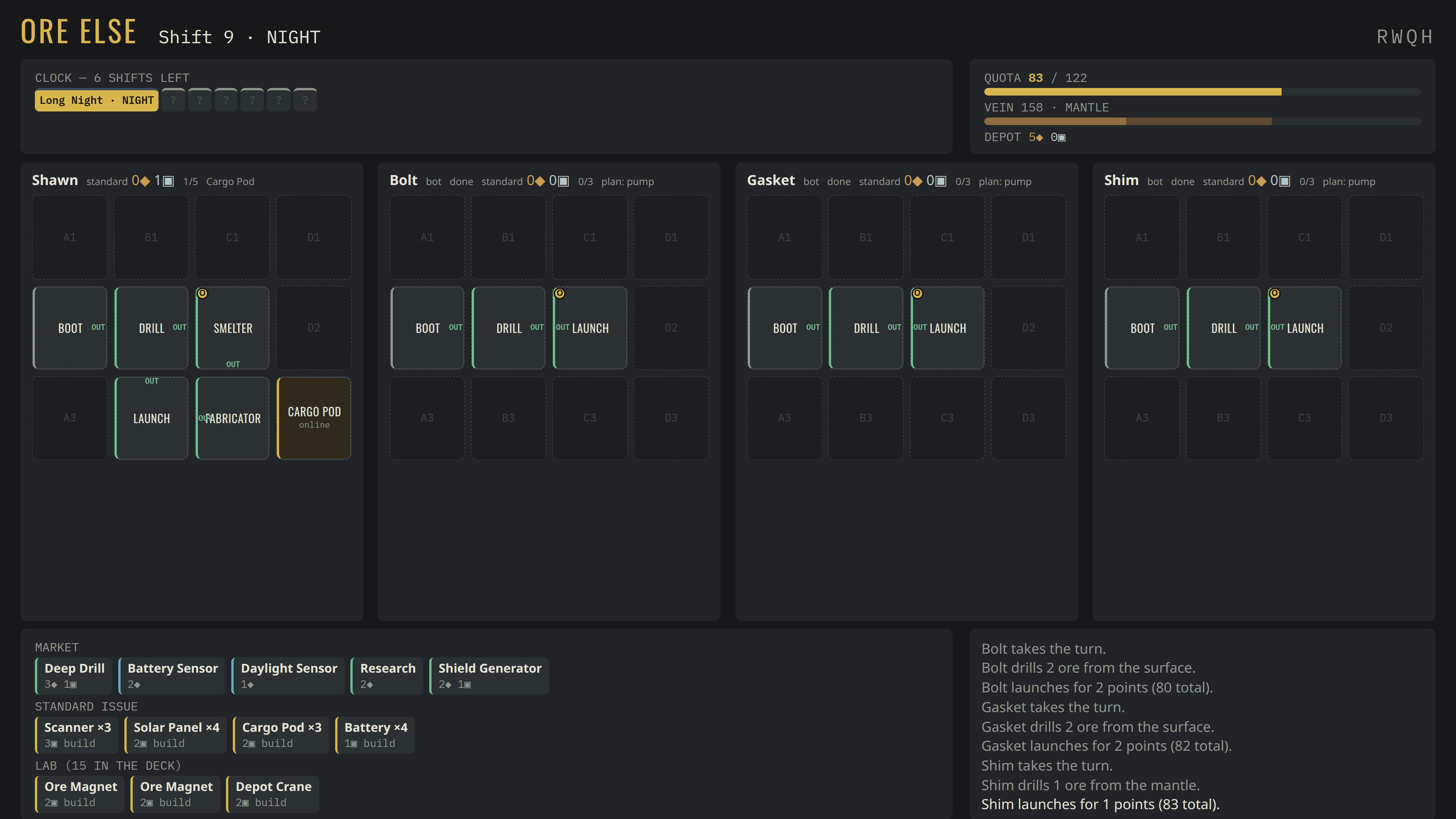
A contract in progress. One firmware has grown into a ring — Drill, Smelter, Fabricator, Launch —
and the module beside it reads online: nobody bought it. It was blueprinted into an empty slot and then fed
metal by that player's own program, one Fabricator visit at a time, which is the only way equipment is ever made.
Along the top sit the shifts still to come, the Quota, how much of the vein is left and which stratum you are down to,
and the shared Depot; down the right the log narrates every step, including the faults.
Four robots, four jobs
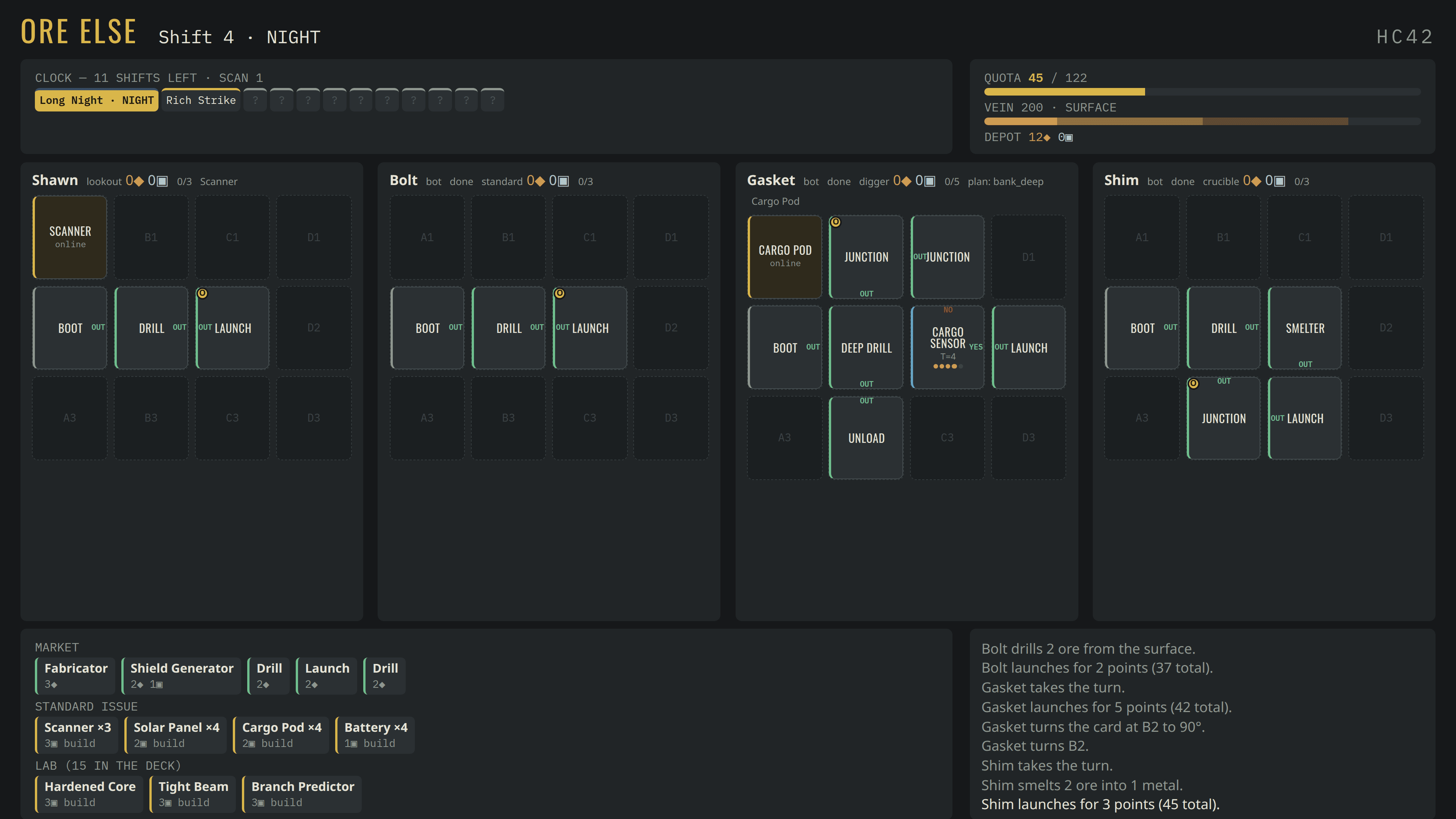
In asymmetric mode every seat starts from a different kit — one opens with a Scanner already online,
another with a bigger hold and a deeper drill, another with a smelting ring. Sensors and counters are how a program
decides for itself: mine until the hold is full, then launch. Top left is the Clock, and the row of cards is the
timer — while somebody is running a Scanner, the next shifts are turned face-up for the whole table to plan against.